
When you look out at your lawn and see something disruptive breaking up your smooth, green carpet of turf, your first instinct is probably to think: "I need to spray for weeds." But did you know that not all lawn invaders are created equal? In fact, treating every unwanted plant the same way is one of the biggest mistakes homeowners make.
To achieve the best results for your yard, it is crucial to understand the difference between Broadleaf Weeds and Undesirable Grasses. Here is a breakdown of what is growing in your Minnesota lawn, why it matters, and exactly what our Fertilization & Weed Control Program can do to help.
The Big Difference: Anatomy Matters
The reason we separate these two categories comes down to basic plant biology. How a plant is structured dictates how a professional herbicide interacts with it.
1. Broadleaf Weeds
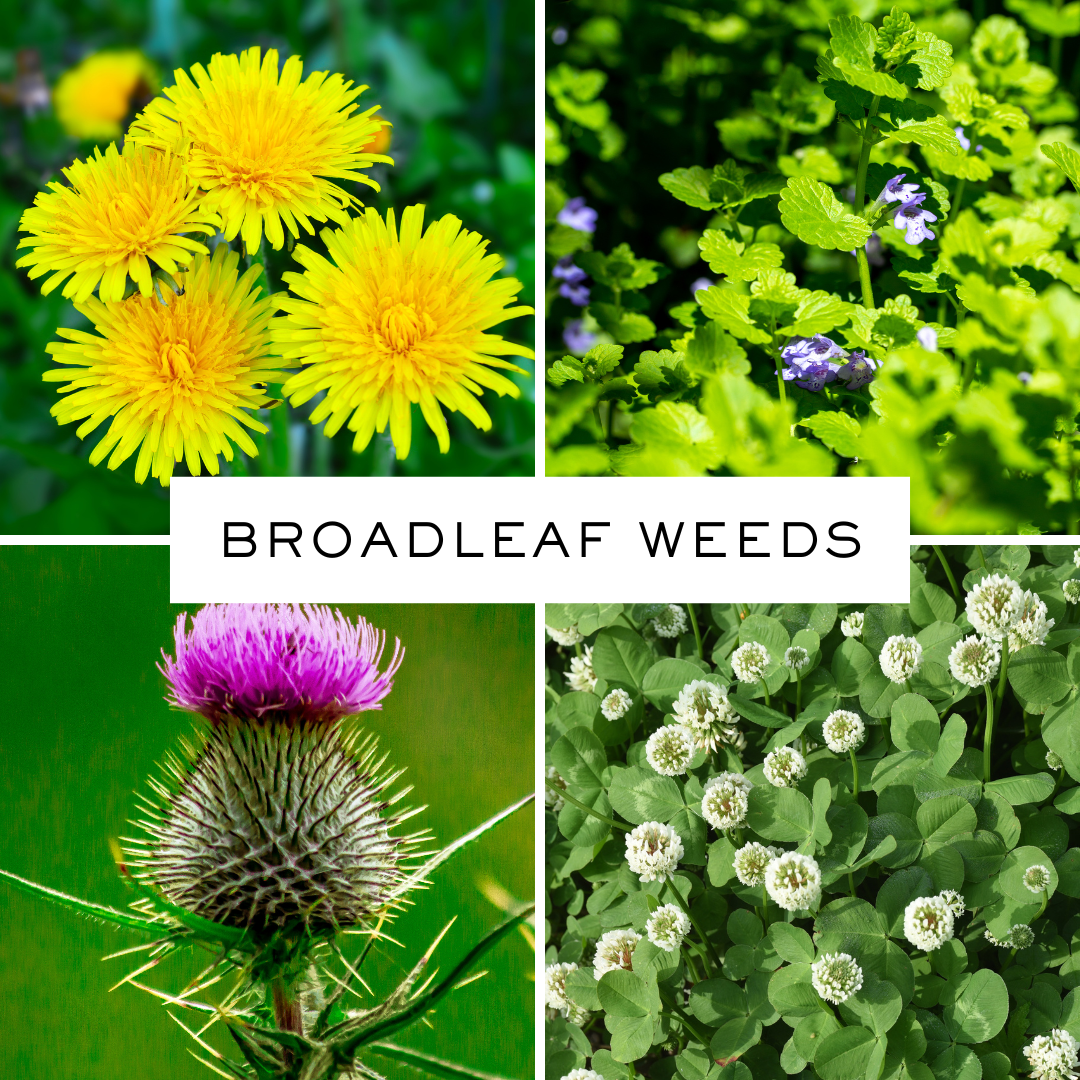
These are the traditional "weeds" most people think of. They do not look like grass at all. They typically have wider leaves with a main vein running down the center and a network of smaller veins branching out. They often produce visible, colorful flowers.
Common Minnesota Examples: Dandelions, Creeping Charlie, White Clover, Plantain, and Thistle.
Our Program's Action: Complete Elimination. Because these plants are biologically completely different from your grass, our selective liquid weed control can target them specifically. The product is absorbed by the wide leaves, travels to the root, and completely removes them without causing any harm to your surrounding lawn.
2. Undesirable Grasses
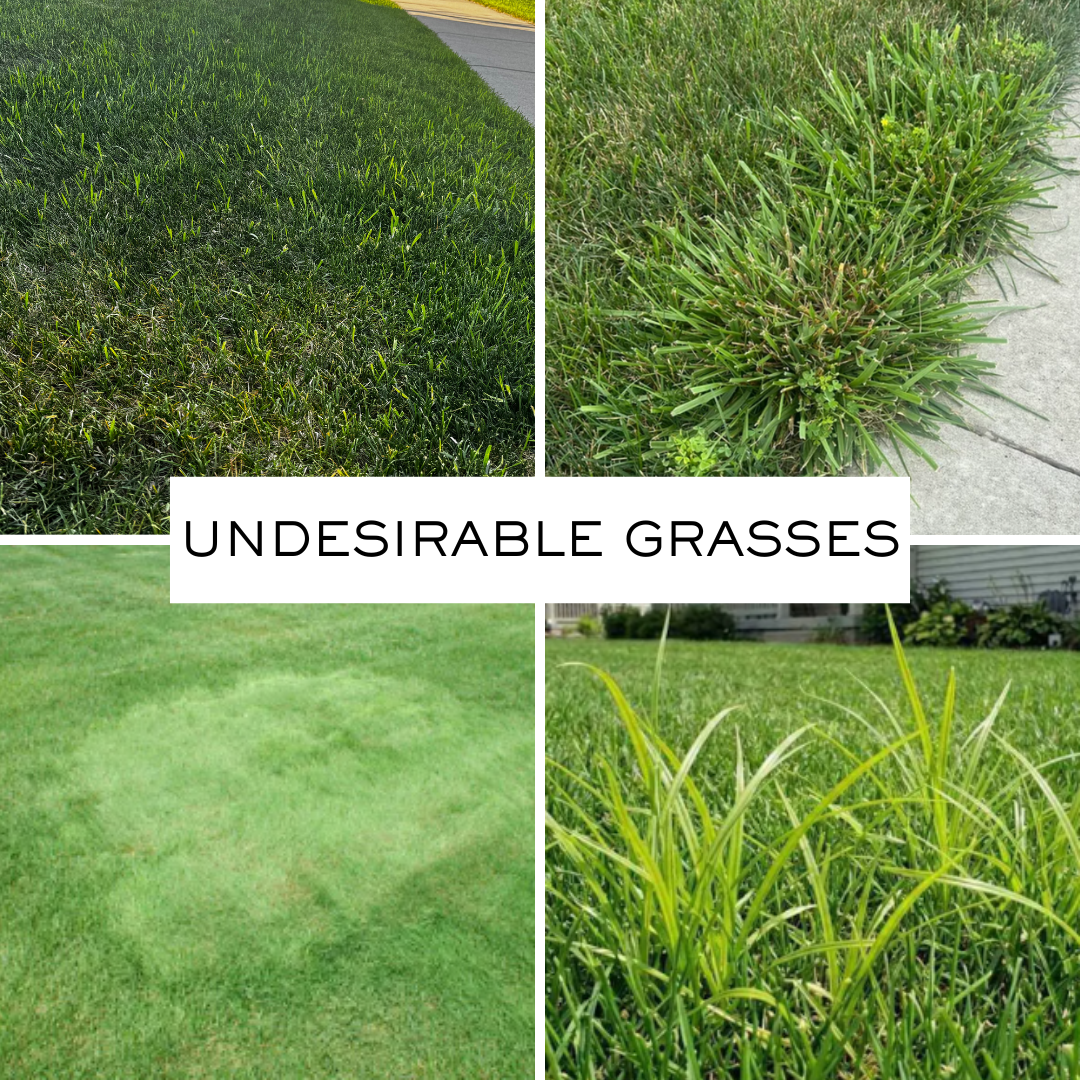
Undesirable grasses are exactly what they sound like. They are technically grasses, but they are types you don't want in your lawn. They have narrow, bladed leaves and parallel veins, meaning they share the exact same biological makeup as your desirable turf (like Kentucky Bluegrass or Fine Fescue).
Common Minnesota Examples: Quackgrass, Bentgrass, Clumping Tall Fescue, and Reed Canary Grass.
Our Program's Action: Identification & Suppression. Because these invaders are genetically almost identical to your good grass, there is no magic selective herbicide that can kill them while leaving your regular lawn unharmed.
The Mesotrione Effect: Turning Undesirable Grasses White
Because undesirable grasses blend in so well, homeowners often don't realize they have them until the patch becomes massive. To combat this, our Fertilization & Weed Control Program utilizes a specialized product called Mesotrione.
If you have ever looked out at your lawn a few days after our team visits and noticed stark, bright white patches of grass, don't panic! That is Mesotrione doing its job. Mesotrione acts like a biological highlighter. When it comes into contact with undesirable grasses like Quackgrass or Bentgrass, it temporarily stops their chlorophyll production, turning the blades a distinct, bright white color.
This serves two incredibly important purposes:
- Easy Identification: It shows both you and our technicians exactly where the undesirable grass is hiding and how much it has spread.
- Suppression: While it won't kill the undesirable grasses down to the root, this whitening process severely stunts and suppresses the undesirable grass. It halts its growth, stopping it from aggressively spreading and choking out your good turf.
Summary: What to Expect From Your Treatment
To help manage expectations for the season, keep this quick summary in mind:
Our Fertilization & Weed Control Program treats Broadleaf Weeds (like dandelions and clover) by knocking them out completely down to the root.
On the other hand, for Undesirable Grasses (like Quackgrass and Bentgrass), the program is designed to turn them white for easy identification and suppress their growth so they cannot take over your yard. The only ways to remove Undesirable Grasses from your yard are either manual removal (digging them out) or using a non-selective herbicide like Roundup (which will kill everything it touches, including your good grass).
Managing a perfect lawn is a partnership between a homeowner and their lawn care team. By recognizing whether you are fighting a broadleaf weed or an undesirable grass, you can better understand the timeline and the treatment required to keep your yard looking its best.
Have you noticed some white patches popping up after our latest application, or do you have questions about a specific grassy invader? Send us an email today.