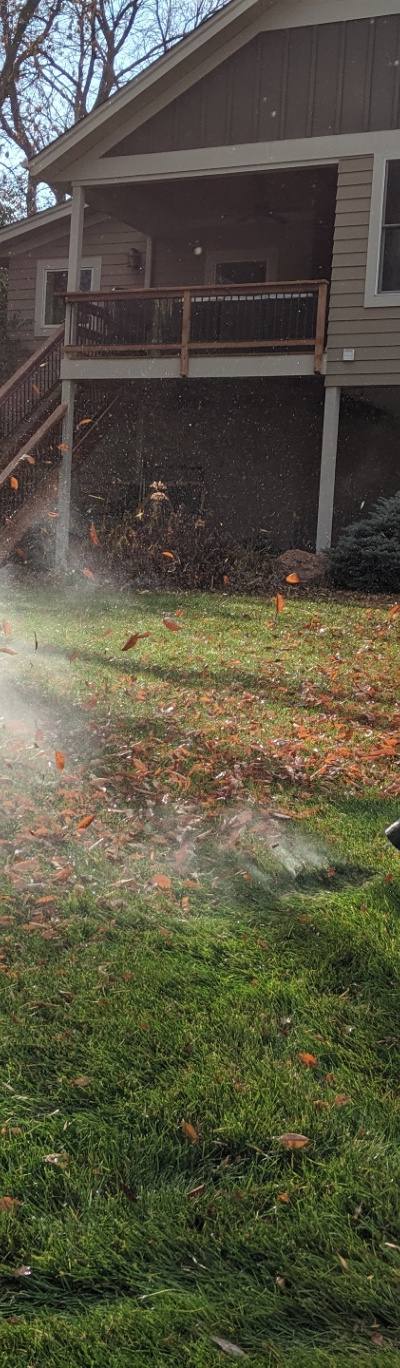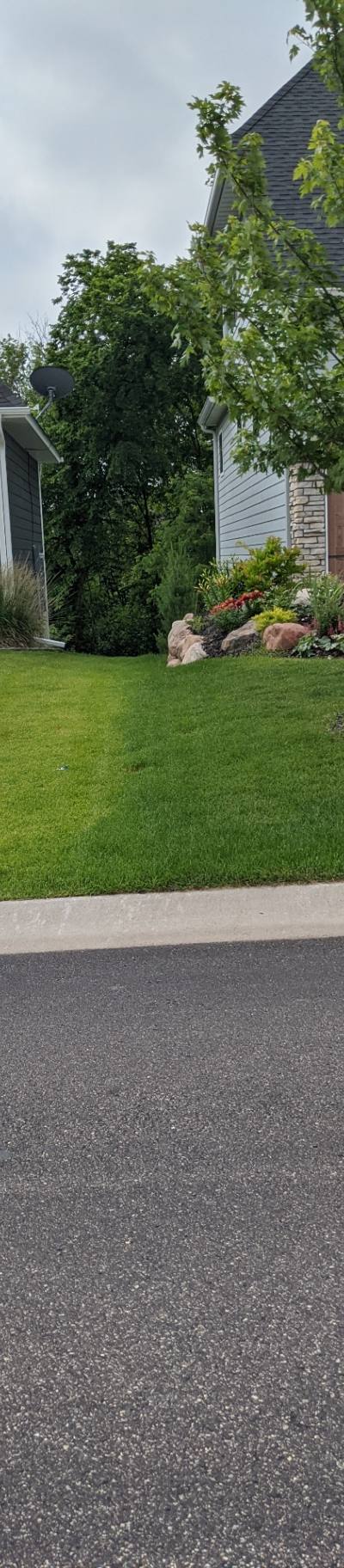
Plenty of lawns in the west metro look rough right now. Thin strips along the driveway. Patches that went crispy in July and never greened back up. Bare soil showing through where the turf used to be thick enough to hide it.
The window for fixing all of that is open right now. It is also shorter than most people expect, and it does not reopen until next August.
Late summer, not fall
Most homeowners think of lawn repair as a spring job. Snow melts, everything looks terrible, and the instinct is to throw seed at it in April.
The University of Minnesota Extension is direct about this one. From their guidance on seeding and sodding home lawns: "The best time to seed in Minnesota is late summer (mid-August to mid-September)."
That is the whole ballgame. Not fall in the general sense, and not the October weekend when you finally have time. Late summer.
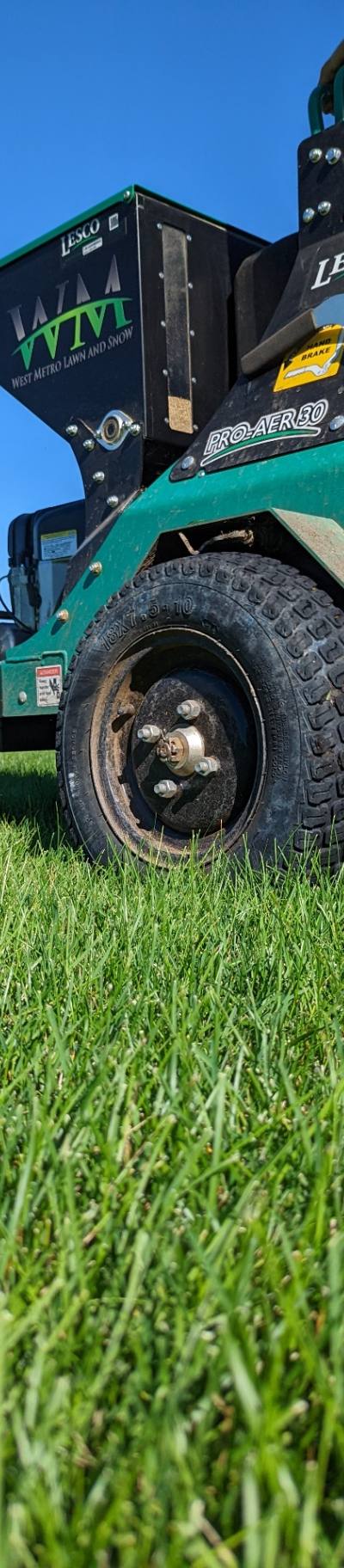
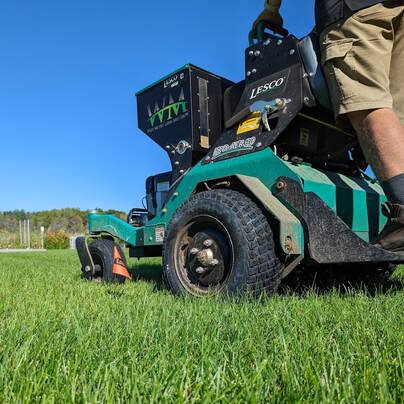
Our crews started aerating on August 10. We will run a machine over more than a thousand lawns between now and the middle of September, then keep going at roughly ten properties a week until the grass quits growing for the year. The early part of that stretch is where the results come from.
Why the timing matters this much
Four things line up in late summer, and they do not line up again until the same time next year.
The soil is still warm. Grass seed germinates on soil temperature, not air temperature. August soil is warm enough to sprout seed in days rather than weeks. By late October it is not.
The air is cooling off. New seedlings have shallow roots and almost no drought tolerance. A seedling that comes up in mid-August gets progressively easier weather. A seedling that comes up in June gets 90 degrees and dies.
The summer weeds have quit. Crabgrass and the other summer annuals are done competing for water and space. Spring seeding puts your new grass in a footrace against every weed seed in the soil. Late summer seeding does not.
There is time to root. Seedlings need enough root mass to survive a Minnesota winter. Grass that comes up in late August has six to eight weeks of growing weather to build that. Grass that comes up October 20 has none, and it heaves out of the ground over the first freeze-thaw cycle.
If you are running behind
We will still seed your lawn after the middle of September. We do it every year, and we will keep doing it.
But we tell people the truth about it first. Seed put down in late September and October will germinate and it will root. It is just meaningfully less likely to make it through winter than the same seed put down five weeks earlier, and you may be looking at bare spots again next April. Earlier is better, and it is better by a lot.
If you get all the way to November without seeding, there is a real option: dormant seeding. You put seed down after the soil is too cold to germinate, it sits there all winter, and it sprouts on its own in early spring before you could get a machine on the lawn. It is a legitimate technique and the U of M has written about it. It is not as good as late summer. It is much better than nothing.
Core aeration, and what a real plug looks like
Aeration and overseeding are two jobs, and the aeration half is where the corners usually get cut.
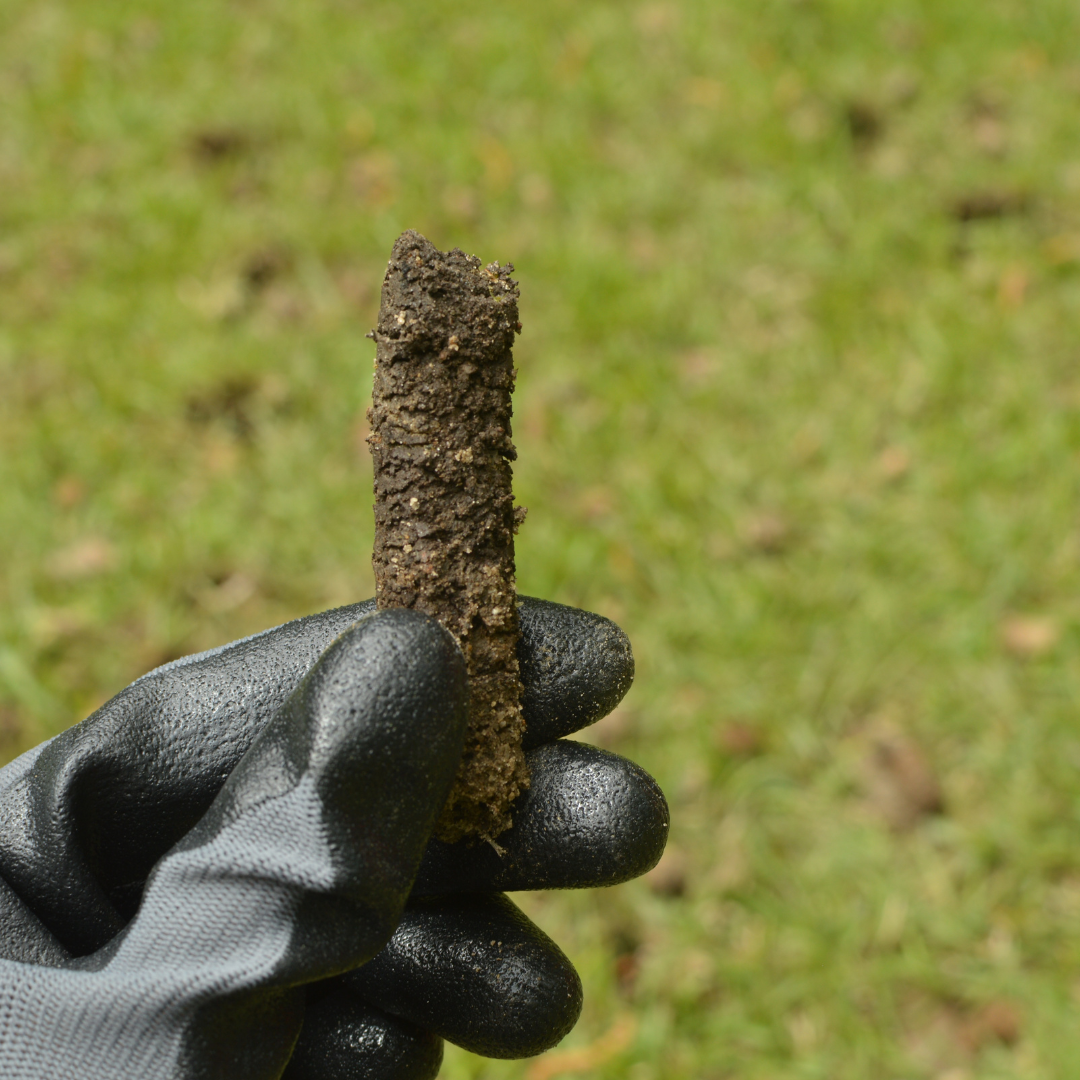
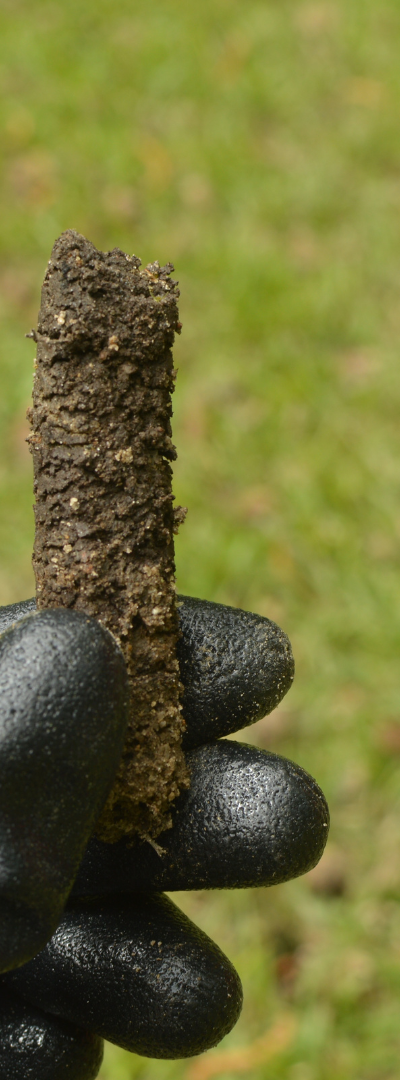
A core aerator pulls plugs of soil out of the ground and drops them on the surface. That relieves compaction, opens a path for water and air to reach the root zone, and gives seed actual soil contact instead of leaving it sitting on top of thatch. Seed that lands in an open core germinates. Seed that lands on thatch mostly feeds birds.
A spike aerator does something different and worse. It punches holes by shoving soil sideways, which compacts the walls of the hole and leaves you with a lawn full of dense little tubes. On the heavy clay under a lot of the newer neighborhoods in Rogers, Otsego and Dayton, spiking is close to useless.
Two more things worth knowing about a good aeration job:
Leave the plugs where they land. They look messy for about a week. Then they break down in the rain and work back into the surface, which is exactly what you want. The U of M recommends letting cores crumble apart on the surface for this reason, and raking them off throws away the best part of the job.
More passes beat one pass. Running the machine in more than one direction puts more holes in the ground and gives the seed more places to land.
If thatch is the underlying problem rather than compaction, that is a different service. Our dethatching page covers when it makes sense.
The advice we tell our customers to ignore
Search around and you will find lawn care sites telling you to put an inch of water on the lawn two or three days before your aeration appointment.
We do not want you to do that.
Two reasons. The first is practical. We cannot promise you an exact service date, because routing depends on weather and how the week ahead of you runs. Watering heavily for a date that moves is wasted effort, and in a dry year it is wasted water.
The second reason is that an inch is genuinely too much. A saturated lawn under a machine that heavy gets rutted, and those ruts are worse than the compaction we came to fix. We would rather aerate slightly dry ground than tear up a yard.
What actually helps is simple. If your soil has been bone dry for weeks, a normal watering cycle a couple of days out softens things enough for the tines to bite. That is the goal. Softer, not soaked.
The watering that matters is what happens afterward, and that is where we point people.
One seed, not a shelf of them
There is a whole genre of lawn advice about matching seed to conditions. A shade mix for under the maple, a sun mix for the front, something else for the strip by the road.
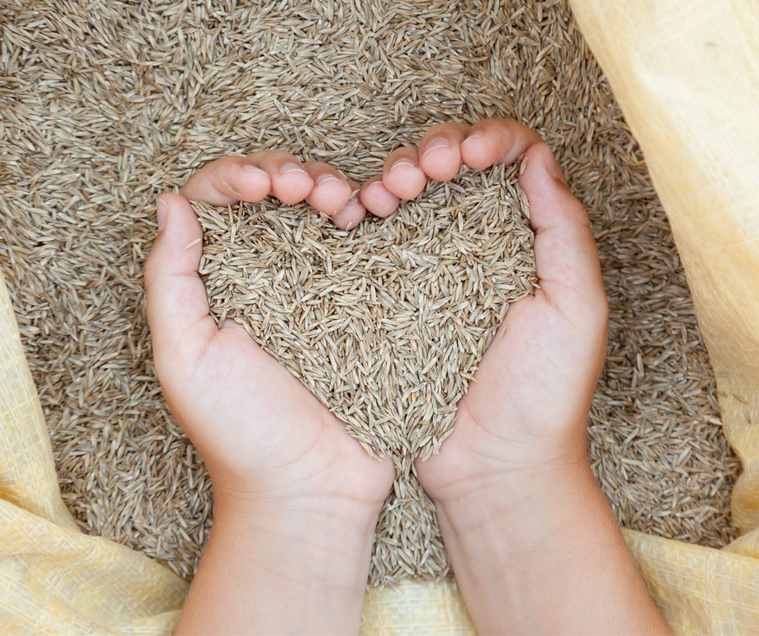
We do not work that way. We use a single high-quality blend that performs across the range of conditions you find in one yard, because that is what actually holds up over years. A blend selected for one narrow condition tends to fail the moment conditions shift, and conditions always shift. Trees grow. Irrigation coverage changes. The neighbor takes down a spruce.
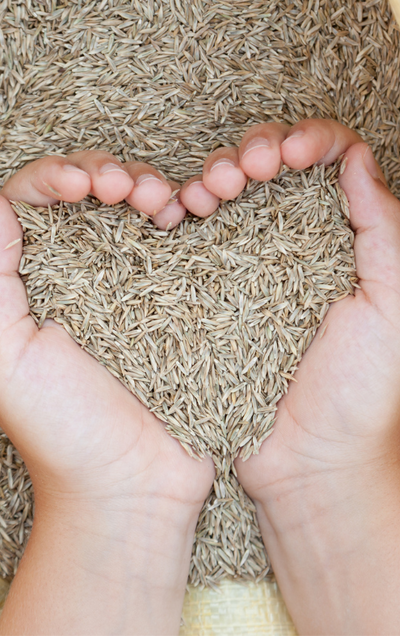
Seed quality does the heavy lifting here, and it is the one place homeowners get burned most often. Bargain seed at the big box store carries weed seed and filler, and you spend the next three years pulling out what you paid to plant. We wrote about how to read a seed label in Grass Seed: Buyer Beware.
After we leave
The first two to three weeks decide whether the seed takes.
Keep the top inch of soil damp. That usually means short, frequent watering rather than one long soak, because a seed sitting in the top half inch of soil does not care what is happening six inches down. Once seedlings are up and established, you stretch the intervals and water deeper.
Hold off on mowing until the new grass is tall enough to cut without getting torn out, and go easy on the first pass.
Every lawn is different, and the specifics change based on your irrigation, your soil and what we found when we got there. We send detailed aftercare guidance for seeding, aeration and soil improvement with the service, and that is the version to follow for your property.
If your soil itself is the problem rather than the grass on top of it, which is common on new construction where the good topsoil left with the builder, organic soil improvement is worth a conversation. We covered why new builds struggle in Poor Soil Quality in New Construction Homes.
What this fixes, and what it does not
Aeration and overseeding solve two specific problems. Compacted soil that water runs off instead of soaking into, and turf that has gone thin enough to let weeds in. For those two things there is no better tool and no better time of year.
It is not a cure-all, and we would rather say so up front than have you disappointed in October.
If your lawn is thinning because of a disease, or grubs are cutting the roots off underneath, new seed just gives the same problem more to chew on. If your irrigation has a dry corner it has always had, that corner will thin out again next July no matter how much seed goes down. And if the lawn is being scalped every week by a mower set too low or a blade that has not been sharpened since 2023, seed will not outrun the mower.
Those are diagnoses, not guesses, and they are worth making before you spend money on seed. When we walk a property we are looking at all of it, not just the bare spots.
The other half is what happens the rest of the year. New seedlings need feeding to fill in, and thick turf is the cheapest weed control there is. That is the job of the fertilization and weed control program, and aeration season is when the two services do the most for each other.
Booking
The schedule is the constraint. We started August 10 and we are working through more than a thousand properties before the middle of September, which is the stretch that produces the best results. After that we keep aerating at a slower pace until growth stops.
If your lawn took a beating this summer, this is the year to get on the list rather than waiting to see if it recovers on its own. It usually does not, and thin turf going into winter turns into a weed problem next May.
Take a look at our aeration and overseeding page for what the service includes, or get in touch and we will get you scheduled. We serve Maple Grove, Plymouth, Rogers, Corcoran, Medina, Dayton and the surrounding west metro.