Late August into September is when grub damage announces itself in the west metro. The lawn made it through the summer, then patches start going brown in a wet stretch when nothing should be drying out. That timing is the clue.
What grubs are
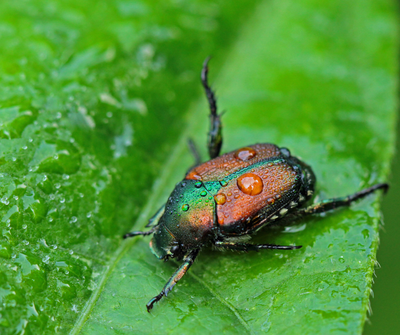
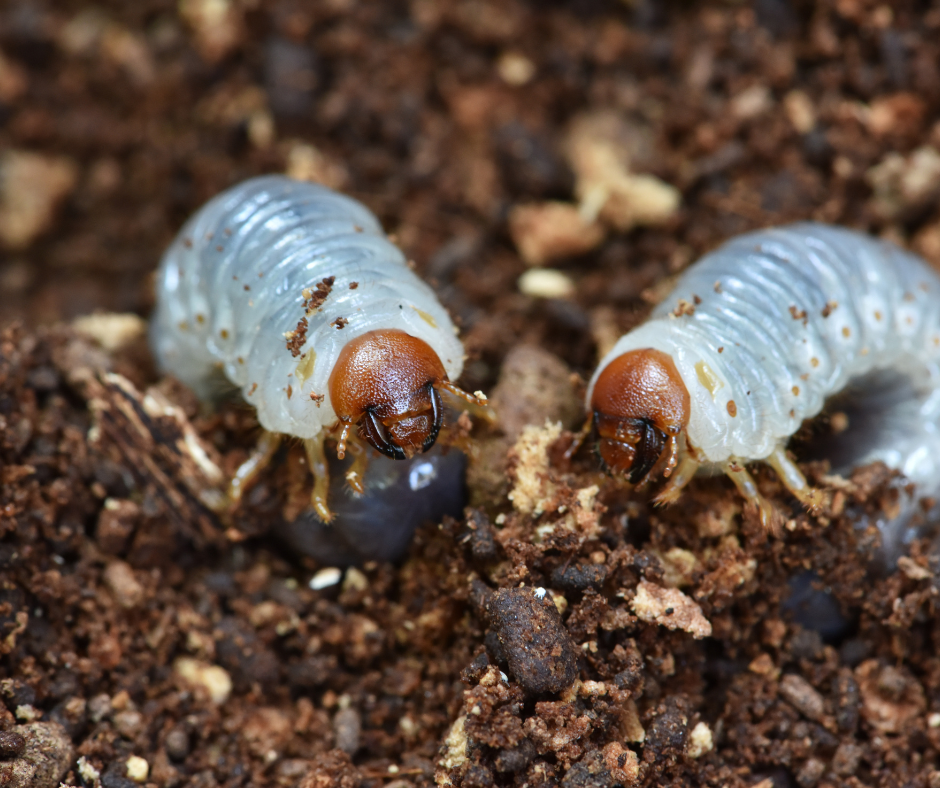
The term grub refers to the larvae of several beetle species found in Minnesota. The two you are most likely dealing with are the larvae of the June bug and the Japanese beetle.
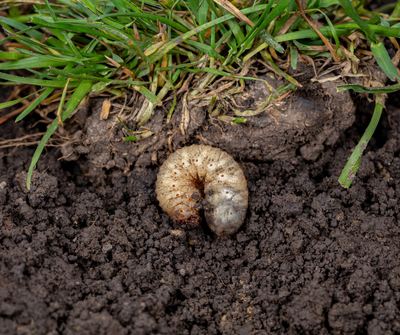
Grubs are small, white, and curled into a C shape. They live in the top few inches of soil and feed on grass roots. That feeding is the whole problem. A lawn with a severed root system cannot take up water no matter how much you give it, which is why grub damage often shows up looking like drought damage during a week of rain.
How to tell if you actually have a grub problem
All Minnesota lawns have grubs. A handful per square foot is normal and causes no damage at all. What matters is whether the population has crossed the threshold where feeding outpaces the lawn's ability to regrow roots.
Five indicators worth checking:
- Dead or brown patches that expand over days and do not respond to watering
- Weak root systems where the turf pulls up easily
- Birds working the lawn hard, particularly crows and starlings
- Animals digging, usually skunks, raccoons or opossums tearing up turf overnight
- Mole activity, since moles follow grub populations
The pull test
This is the one that settles it. Grab a handful of grass at the edge of a brown patch and pull straight up. Healthy turf resists. Grub-damaged turf lifts away like a piece of carpet, because the roots holding it down have been eaten off.
Peel back a square foot of that turf and count what you find underneath. Fewer than five grubs per square foot is normal. Ten or more is a treatable problem.
That distinction matters. Brown patches in late summer are just as often drought dormancy or disease, and neither is helped by a grub treatment. Our guide on telling a dead lawn from a dormant one covers how to rule that out first, and common lawn diseases covers the rest.
Timing is most of the battle
Grub control is not one treatment. It is two different approaches with two different windows, and using the wrong one at the wrong time is why homeowner applications so often fail.
Preventive treatment goes down before the eggs hatch, in early to midsummer. It sits in the soil so that newly hatched grubs feed on treated roots and die while they are small. This is by far the more reliable approach, and it is what we recommend for any lawn with a history of grub damage.
Curative treatment targets grubs that are already feeding, in late summer and early fall. It works, but the window is narrower. Grubs are largest and most damaging in late summer, and as soil cools in fall they burrow deeper and stop feeding, which puts them out of reach.
Once grubs have moved down for winter, no treatment reaches them. At that point the work shifts from control to repair.
Repairing the damage
Turf killed by grubs does not come back on its own, because the crowns went with the roots. Those areas need to be reseeded.
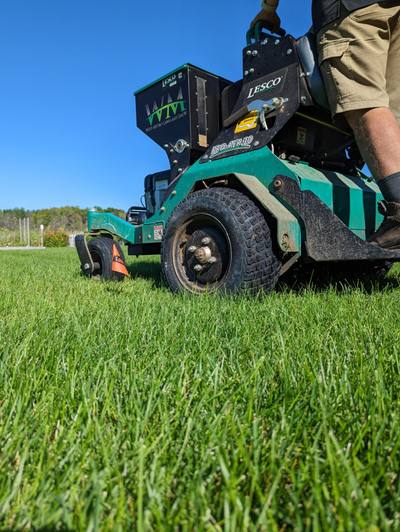
The good news is that grub damage tends to show up right as the best seeding window of the year opens. Late August through mid September is prime overseeding season in Minnesota, so damaged areas can be repaired in the same visit that improves the rest of the lawn. Core aeration and overseeding is the standard fix, and choosing good seed matters more than most people expect. Grass seed in Minnesota covers how to read a seed label.
A note on mild winters
Grub pressure is not the same every year. A warm winter with reliable snow cover lets more larvae survive to spring, which means a heavier beetle flight and more eggs the following summer. We wrote about that pattern in warm winter, more grubs.
Does West Metro offer grub control?
Yes. We handle both preventive and curative applications, and our technicians will tell you honestly if what you are looking at is not a grub problem. Treating a lawn for grubs it does not have costs money and fixes nothing.
Visit our grub control page for details, or contact us to request an estimate.