
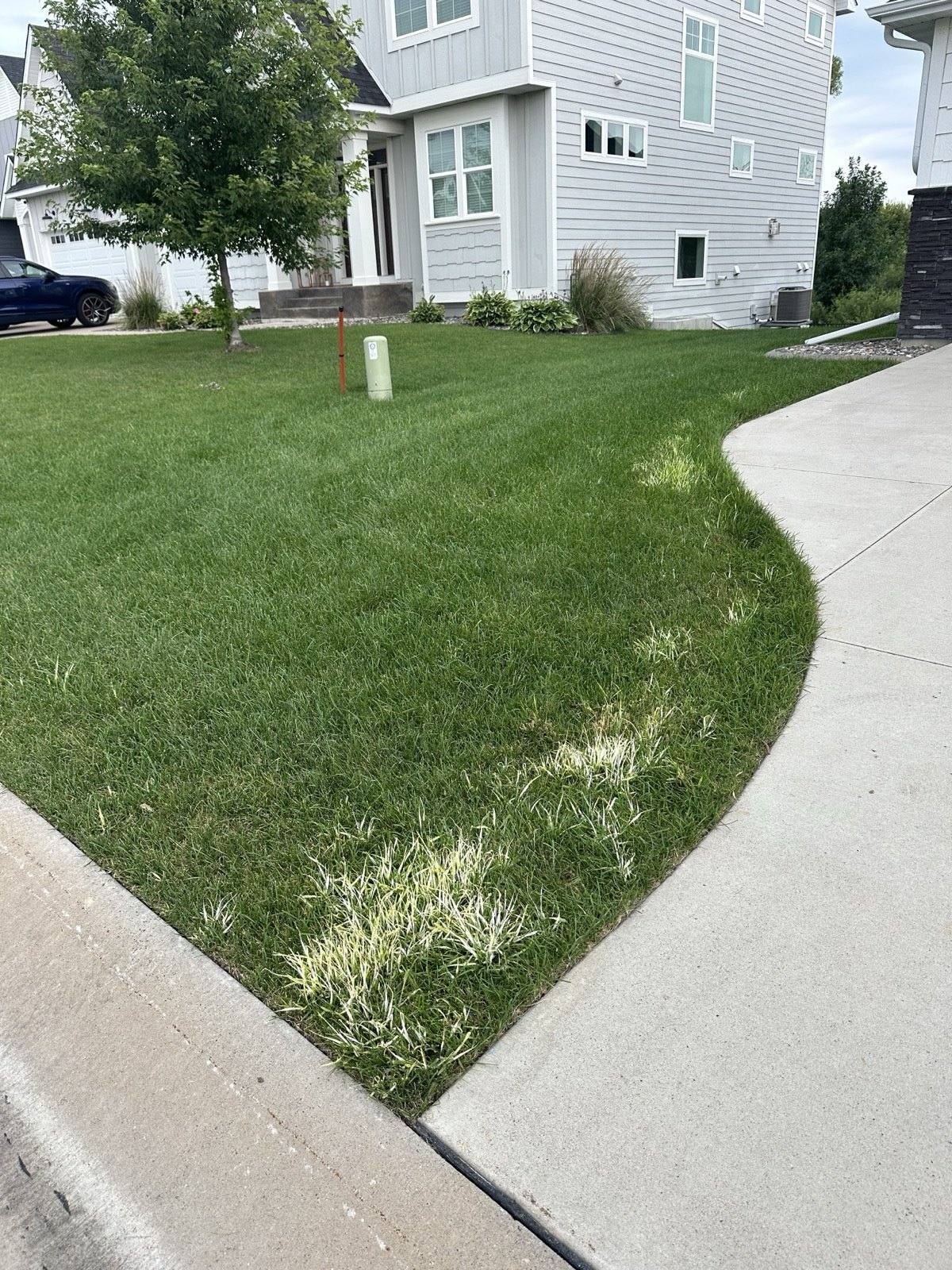
If you have walked out into your Minnesota yard after a weed control treatment and noticed patches of grass turning ghostly white, you might be wondering if something went wrong. The short answer is no. In fact, it means the treatment is working exactly as intended.
The Science Behind the Bleaching: How Mesotrione Works
The specialty herbicide responsible for this visual transformation is Mesotrione, often known by the brand name Tenacity. Unlike traditional weed killers that simply brown or curl broadleaf weeds, Mesotrione works through a unique biochemical mechanism:
Halts chlorophyll production. Mesotrione inhibits a specific plant enzyme (HPPD) required for carotenoid synthesis. Without carotenoids, sunlight breaks down the chlorophyll inside the targeted weed.
The bleaching effect. As chlorophyll vanishes, the plant loses its green pigment and turns bright white.
Targeted disruption. Because desirable turfgrasses such as Kentucky Bluegrass, Perennial Ryegrass and Tall Fescue tolerate Mesotrione far better than invasive grassy weeds, the treatment selectively stresses the undesirable invaders while leaving your primary lawn intact.
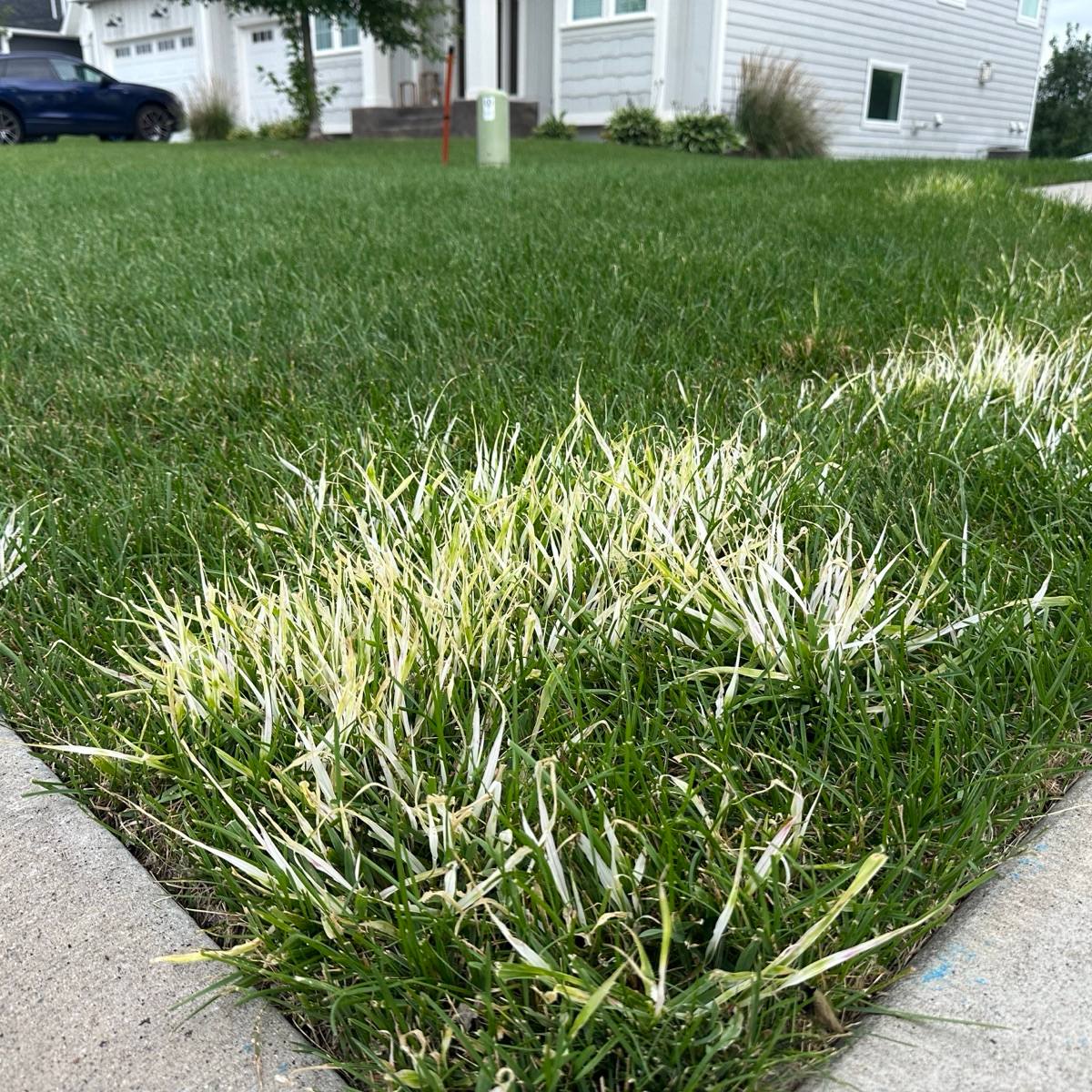
Many average lawn care companies skip specialty products like Mesotrione due to cost or lack of technical focus. Our Fertilization & Weed Control Program incorporates Mesotrione into multiple liquid weed control applications to target aggressive grassy weeds that standard herbicides miss.
The Main Targets: Bentgrass and Quackgrass
If you are seeing white texturing in your yard, it is usually targeting two notoriously persistent culprits.
1. Creeping Bentgrass
Bentgrass is a fine-textured, shallow-rooted invasive grass that forms pale patches in lawns. When treated with Mesotrione, bentgrass whitens significantly and begins to die back. While it can take an intensive, multi-application process to completely remove bentgrass, regular treatments keep it heavily suppressed.
2. Quackgrass
Quackgrass is often misidentified as crabgrass, but it is far more aggressive. It spreads via underground root systems called rhizomes, and it cannot be completely eradicated by any selective herbicide without also killing the surrounding healthy turfgrass. While Mesotrione will not kill quackgrass permanently, it severely stunts its growth, knocks it back, and keeps it from dominating your lawn.
> Related reading: Understanding and Managing Quackgrass and Broadleaf Weeds vs. Undesirable Grasses.
"I Want It Gone!"
According to the University of Minnesota Extension, there are only two ways to achieve 100% eradication of the undesirable grasses that are turning white from Mesotrione:
Non-selective herbicides such as glyphosate. Spraying the entire patch kills the quackgrass, but it also kills all the good grass in the area, which means a full re-seeding project afterward.
Manual digging. Physically digging out the grass and its entire underground root network, several inches deep, so that no rhizomes remain.
Because neither option is compatible with maintaining an established lawn during a standard maintenance visit, ongoing selective suppression with Mesotrione remains the best defense.
What to Expect Next
While the temporary white texturing can be visually striking, it is a normal part of suppressing tough weeds.
Timeline. The whitening effect typically reaches its peak 7 to 14 days after treatment. Over the following weeks, as desirable grass grows and gets mowed, the white tissue will disappear.
Future treatments. Because quackgrass and bentgrass are so persistent, you may see this white coloring reappear during future treatment rounds.
Seeing white in your lawn is not a sign of damage. It is proof that advanced weed control is actively keeping invasive grasses at bay.
Questions about a specific patch in your yard? Get in touch and we will take a look.